
If your skin suddenly feels tight, stings when you apply products that never used to bother you, or keeps breaking out no matter what you try, the problem might not be your routine — it might be your skin barrier.
This guide covers exactly how to repair a damaged skin barrier, why it happens in the first place, and which products actually help versus which ones make it worse.
What Is the Skin Barrier?
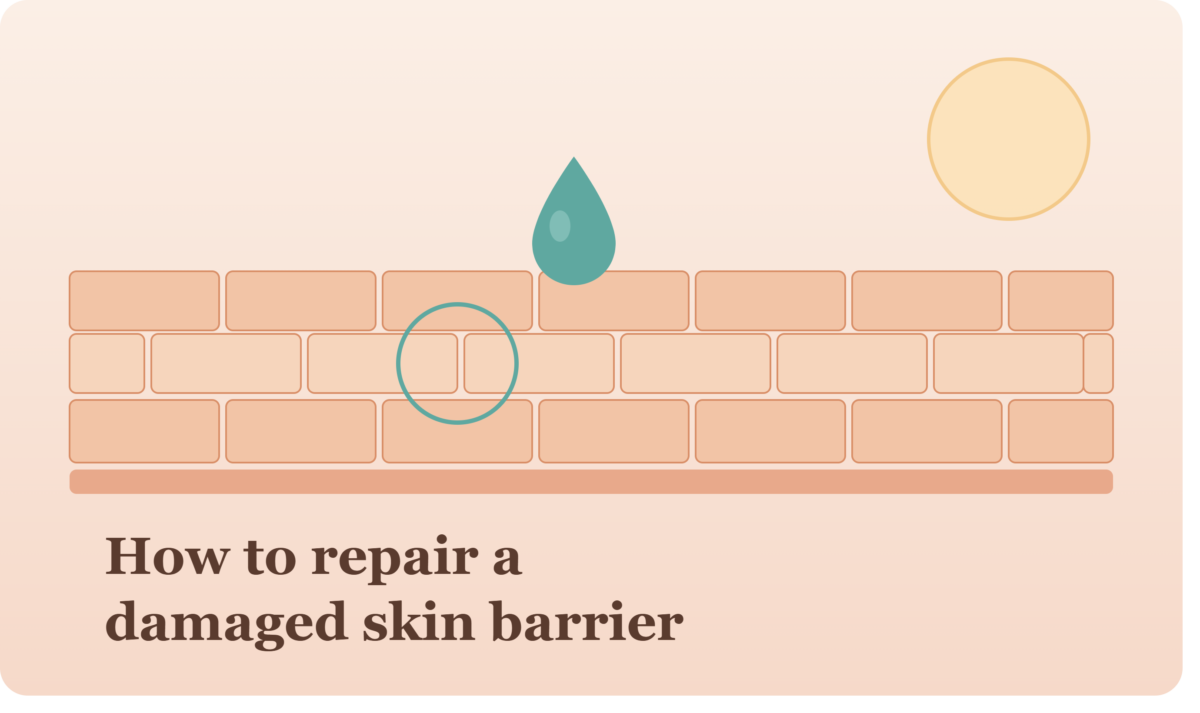
Your skin barrier is the outermost layer of skin (the stratum corneum). Think of it like a brick wall: skin cells are the “bricks,” and lipids like ceramides, cholesterol, and fatty acids are the “mortar” holding everything together. When that mortar breaks down, moisture escapes and irritants get in — which is when problems start.
Signs of a Damaged Skin Barrier
- Skin feels tight, dry, or rough even right after moisturizing
- Stinging or burning when applying products that used to feel fine
- Redness or a flushed appearance that doesn’t fully calm down
- Random breakouts alongside dry, flaky patches (a confusing combination)
- Skin looks dull or feels “reactive” to weather, wind, or new products
If two or more of these sound familiar, your barrier likely needs repair before you add anything else to your routine.
What Causes a Damaged Skin Barrier
- Over-exfoliating — using acids, scrubs, or retinol too frequently
- Over-cleansing — washing your face more than twice a day, or using hot water
- Stacking too many actives — combining retinol, vitamin C, and acids without giving skin time to adjust
- Weather extremes — cold, dry winter air or harsh sun exposure
- Hormonal shifts — hormonal changes can weaken the barrier and make skin more reactive, which is part of why breakouts and dryness often show up together during these periods
- Long hot showers — hot water strips natural oils faster than warm or cool water
How to Repair a Damaged Skin Barrier: Step-by-Step
Step 1: Stop Everything Active for 1–2 Weeks
Pause retinol, exfoliating acids (AHA/BHA), and physical scrubs completely. This is the single most important step — you cannot repair a barrier while continuing to damage it.
Step 2: Simplify to Three Products
Cut your routine down to a gentle cleanser, a barrier-repairing moisturizer, and sunscreen. Skip toners, essences, and serums until your skin calms down.
Step 3: Choose Barrier-Repair Ingredients
Look for these on ingredient labels — they rebuild rather than treat:
- Ceramides — replace the lipids your barrier has lost
- Centella asiatica (cica) — calms redness and inflammation
- Panthenol (pro-vitamin B5) — soothes and supports healing
- Squalane — lightweight, non-irritating moisture without clogging pores
- Colloidal oatmeal — reduces itching and sensitivity
Step 4: Use Lukewarm Water Only
Hot water feels good but accelerates moisture loss. Switch to lukewarm water for washing your face, and pat skin dry instead of rubbing.
Step 5: Reintroduce Actives Slowly
Once redness, tightness, and stinging have resolved (usually 2–4 weeks), reintroduce one active ingredient at a time, once every 1–2 weeks, starting with the gentlest option.
Best Products for Skin Barrier Repair (What to Look For)
You don’t need a specific brand — you need the right ingredient profile. When shopping, prioritize:
- Moisturizers listing ceramides or “ceramide complex” in the first few ingredients
- Fragrance-free formulas (fragrance is one of the most common irritants during barrier repair)
- “Barrier repair,” “recovery,” or “sensitive skin” labeling over “brightening” or “exfoliating” labeling
How Long Does Skin Barrier Repair Take?
Most mild cases improve within 2–4 weeks of a simplified routine. More significant damage — from long-term over-exfoliation, for example — can take 6–8 weeks to fully recover. Consistency matters more than speed here; switching products again mid-repair often resets the clock.
Frequently Asked Questions
Can a damaged skin barrier cause acne? Yes. A weakened barrier lets irritants in more easily and struggles to regulate oil production, which can trigger breakouts even in skin that wasn’t previously acne-prone.
Should I stop moisturizing if my skin barrier is damaged? No — moisturizer is essential during repair. What you should stop is anything active or exfoliating, not hydration.
Is Vaseline good for skin barrier repair? Petroleum jelly can help lock in moisture as an occlusive, but it doesn’t actively rebuild the barrier the way ceramides do. It works best as a top layer over a ceramide moisturizer, not a replacement for one.
How do I know if my barrier is healed? Skin stops stinging when you apply products, redness settles, and it feels comfortable rather than tight after cleansing.
Final Thoughts
A damaged skin barrier isn’t fixed by adding more products — it’s fixed by removing what’s causing the damage and giving your skin the specific ingredients it needs to rebuild. Once your barrier is healthy again, everything else in your routine works better too.