
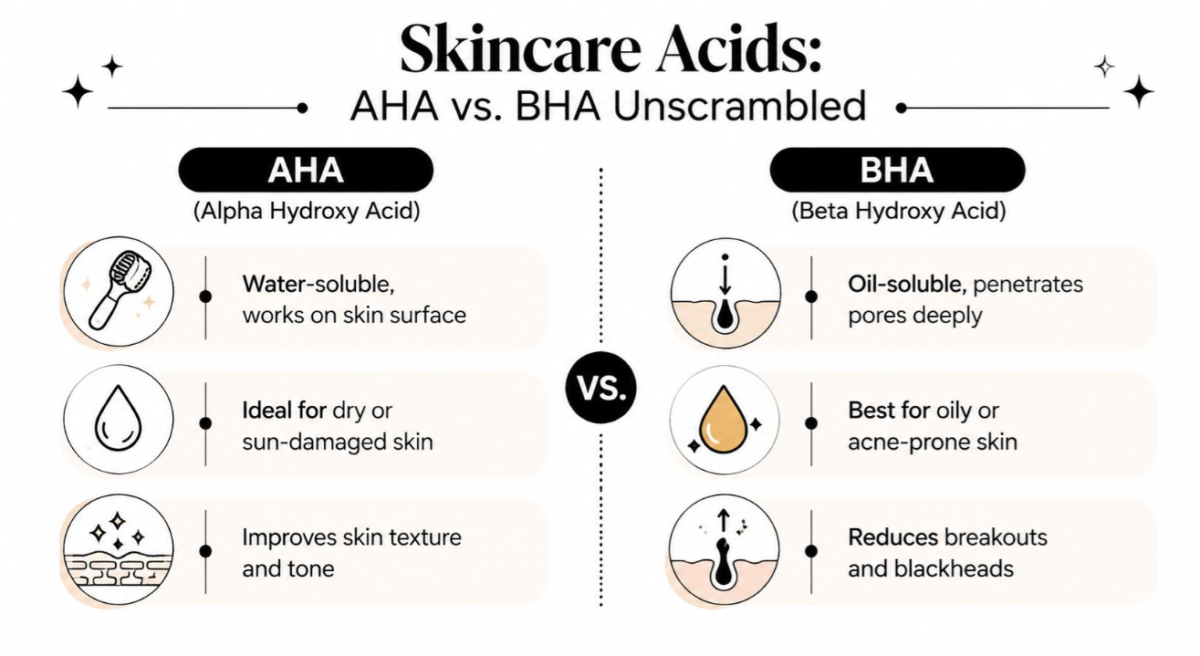
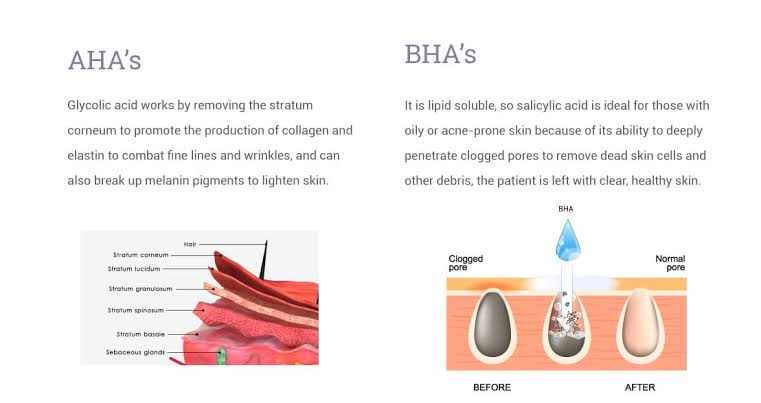
Acid is a lipid-soluble Beta Hydroxy Acid. Because it can penetrate oil, it is the gold standard ingredient for treating congestion, oily skin, and active acne.
Key Benefits of Salicylic Acid:
- Deep Pore Cleansing: Dissolves the mixture of sebum and keratin that forms blackheads, whiteheads, and sebaceous filaments.
- Anti-Inflammatory Properties: Chemically related to aspirin (acetylsalicylic acid), it actively soothes inflamed red pimples and calms acne-related redness.
- Sebum Regulation: Helps control excess surface shine by slowing oil buildup inside the follicle.
Best For: Oily skin, acne-prone skin, blackheads, enlarged pores, and red inflammatory breakouts.
Glycolic Acid (AHA): The Surface Resurfacer
Derived from sugar cane, Glycolic Acid has the smallest molecular size of all Alpha Hydroxy Acids. This tiny structure allows it to penetrate the surface layers of the skin faster and deeper than other AHAs (like Lactic or Mandelic Acid), making it incredibly effective at resurfacing texture.
Key Benefits of Glycolic Acid:
- Fades Hyperpigmentation: Accelerates the shedding of melanin-rich surface cells to lighten dark spots, sun damage, and post-acne marks (PIH).
- Smooths Rough Texture: Sloughs off dead skin cells to reveal smoother, brighter skin underneath.
- Boosts Collagen & Hydration: Stimulates collagen production in the dermis and acts as a humectant to bind moisture to the skin.
Best For: Normal to dry skin, dullness, uneven skin tone, dark spots, fine lines, and rough texture.
Side-by-Side Comparison Matrix
| Feature | Salicylic Acid (BHA) | Glycolic Acid (AHA) |
| Solubility | Oil-Soluble | Water-Soluble |
| Primary Level of Action | Inside the pores & surface | Surface layer of skin |
| Primary Target Concern | Acne, blackheads, excess oil | Dark spots, fine lines, dullness |
| Skin Type Suitability | Oily, combination, acne-prone | Normal, dry, mature, sun-damaged |
| Typical Effective % | 0.5% – 2% | 5% – 10% |
| Irritation / Drying Risk | Low to Moderate (drying) | Moderate (can cause stinging/redness) |
Can You Use Salicylic Acid and Glycolic Acid Together?
Yes, but never apply them stacked directly on top of each other at the same time. Layering strong AHA and BHA serums simultaneously disrupts your skin barrier, leading to redness, peeling, and reactive breakouts.
How to Safely Combine Both Acids:
- Alternate Nights: Use Salicylic Acid on Night A (to manage pores) and Glycolic Acid on Night B (to resurface skin), followed by a recovery night focused solely on hydration.
- Zone Treatment: Apply Salicylic Acid only to your oil-prone T-zone (nose, chin, forehead) and Glycolic Acid to your cheeks and drier outer areas.
- Use a Formulated Blend: Choose a single product expertly formulated with low concentrations of both AHAs and BHAs to ensure stability and minimize irritation.
Which One Should You Choose?
- Choose Salicylic Acid if: Your main complaints are clogged pores, persistent blackheads, acne breakouts, or a shiny, greasy T-zone.
- Choose Glycolic Acid if: You want to smooth bumpy texture, fade stubborn dark spots, boost radiance, or address early signs of aging.