
Losing 50 to 100 strands a day is normal, but if your brush, shower drain or pillow is filling up faster than usual, you can usually reduce hair fall by fixing a few everyday habits: gentler washing, better nutrition, less heat and tension, and a healthy scalp. Here is a clear, practical plan.
What Causes Hair Fall?
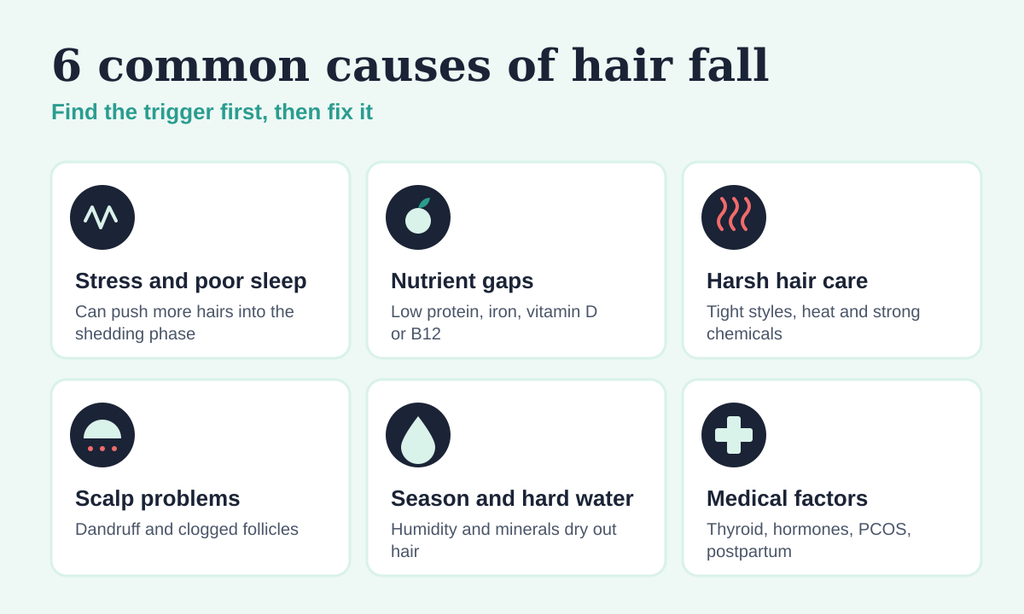
Understanding the cause makes the fix easier. Common triggers include:
- Stress and lack of sleep: these can push more hairs into the shedding phase.
- Nutrient gaps: low protein, iron, vitamin D or B12 intake is linked with thinner hair.
- Harsh hair care: tight hairstyles, frequent heat styling and strong chemical treatments.
- Scalp problems: dandruff and clogged follicles from sweat, oil and pollution.
- Seasonal change and hard water: monsoon humidity and hard water can leave hair dry and brittle.
- Medical factors: thyroid issues, hormonal changes, PCOS, postpartum changes or certain medicines.
12 Tips to Reduce Hair Fall
1. Wash on a schedule that suits your scalp. Oily scalps do well with washing 2 to 3 times a week; dry scalps can stretch to once or twice. A clean scalp supports healthy growth.
2. Use a mild shampoo. Choose a gentle formula and massage the scalp, not the lengths, for a full minute.
3. Always condition the lengths. Conditioner reduces friction and breakage when you comb.
4. Comb gently. Detangle from the tips upward with a wide-tooth comb, and never brush aggressively when hair is soaking wet.
5. Oil your scalp the smart way. Warm coconut, castor or amla-infused oil massaged for 5 to 10 minutes improves comfort and reduces breakage. Leave it on for 1 to 2 hours, then wash. Do not leave heavy oil on overnight if you are prone to dandruff.
6. Eat for your hair. Include eggs, dal, paneer, sprouts, nuts, seeds, leafy greens and citrus fruit. Hair is mostly protein, so low protein diets show up quickly.
7. Manage stress. Walking, yoga, breathing exercises and 7 to 8 hours of sleep all help the hair cycle recover.
8. Reduce heat styling. Keep heat tools on a low setting and always use a heat protectant. Air-dry whenever you can.
9. Avoid tight hairstyles. Constant pulling from tight ponytails and buns causes traction hair loss. Switch styles regularly.
10. Protect hair from sun, pollution and chlorine. Cover hair outdoors and rinse after swimming.
11. Treat dandruff early. An itchy, flaky scalp can increase shedding. Use an anti-dandruff shampoo as directed.
12. Be consistent for at least 3 months. Hair grows slowly, so judge results after 8 to 12 weeks, not 8 to 12 days.
Quick Reference: Do and Don’t
| Do | Don’t |
|---|---|
| Massage your scalp gently | Scratch with nails or scrub hard |
| Use a wide-tooth comb | Pull through knots when wet |
| Eat protein at every meal | Crash diet or skip meals |
| Use heat protectant | Style on high heat daily |
When to See a Doctor
If you notice patchy bald spots, sudden heavy shedding for more than 2 to 3 months, a widening parting, or scalp pain and redness, consult a dermatologist or trichologist. Blood tests can check for thyroid and nutrient issues.
FAQs
Is it normal to lose 100 hairs a day? Yes. Roughly 50 to 100 strands daily is considered normal shedding.
Does oiling stop hair fall? Oiling mainly reduces breakage and keeps the scalp comfortable. It will not fix hair loss caused by medical or nutritional issues.
How long does it take to reduce hair fall? Most people notice less shedding after 8 to 12 weeks of consistent care.
Final takeaway: Fix the basics, stay consistent and get a professional check if shedding does not settle. For your next step, read our guide to a hair care routine for beginners and how to choose the right shampoo for your hair type.
Disclaimer: This article is for general information and is not medical advice.