

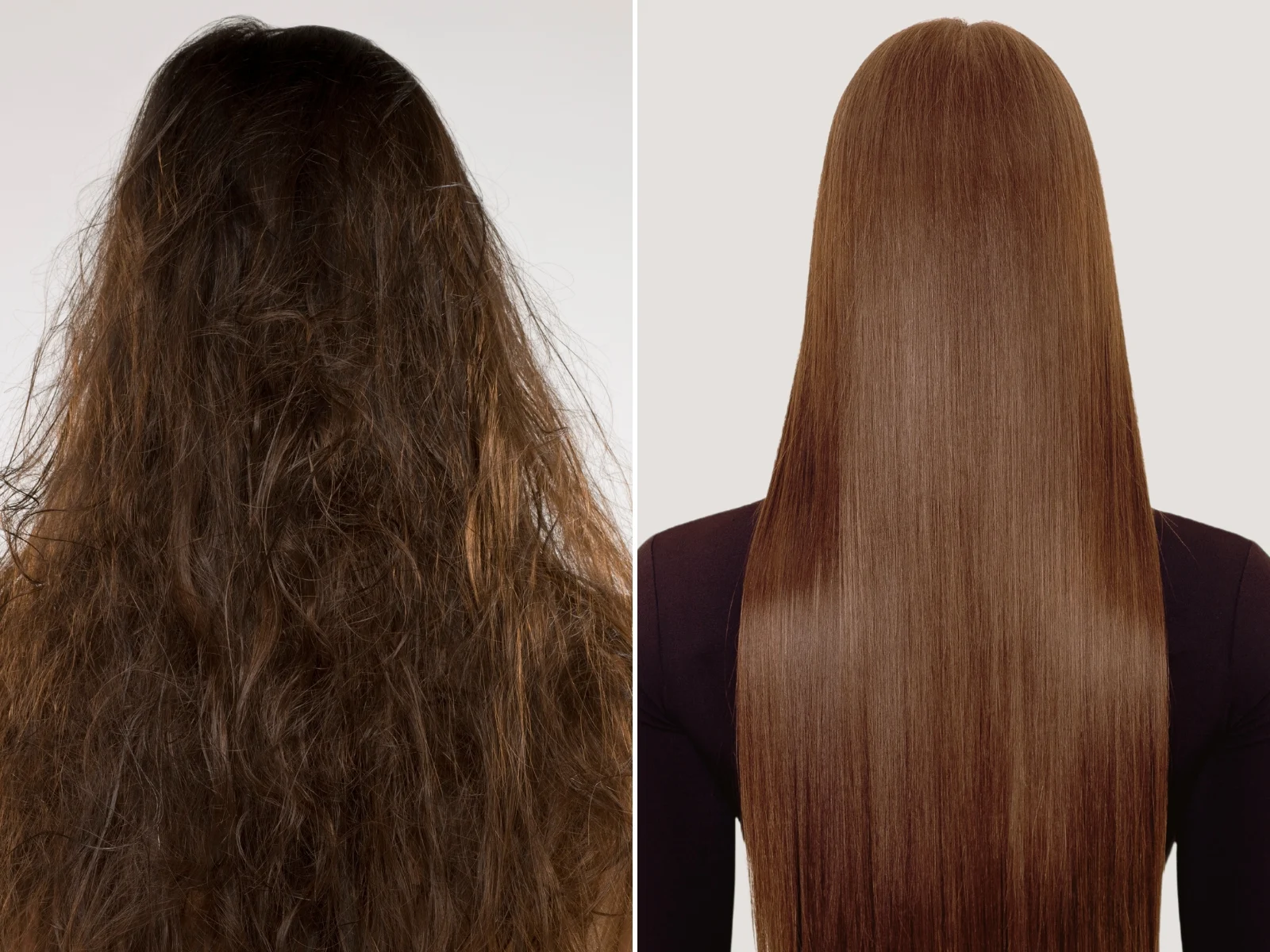
If you’ve ever styled your hair perfectly, stepped outside, and watched it puff up within minutes, you know how frustrating frizz is. The good news is that frizz is fixable. Once you understand why it happens, you can change your routine and see a real difference.
This guide explains the causes of frizzy hair and gives you nine practical fixes you can start using this week.
Why Is My Hair Frizzy?
Frizz happens when the outer layer of your hair (the cuticle) is raised and rough. Instead of lying flat, it absorbs moisture from the air, causing the strand to swell and stick out. The most common triggers are:
- Dryness: Dry hair pulls in humidity to make up for missing moisture.
- Heat damage: Flat irons and blow dryers roughen the cuticle over time.
- Harsh shampoos: Strong sulfates can strip natural oils.
- Rough towel drying: Rubbing creates friction and lifts the cuticle.
- Chemical treatments: Bleaching and coloring make hair more porous.
- Humidity: Damp air causes even healthy hair to swell.
9 Ways to Control Frizzy Hair
1. Switch to a hydrating, sulfate-free shampoo
Look for gentle cleansers that don’t strip your scalp. Wash 2 to 3 times a week rather than daily, unless your scalp is very oily.
2. Condition every wash, and focus on the ends
Apply conditioner from mid-length to ends, leave it for 2 to 3 minutes, and rinse with cool water. Cool water helps the cuticle lie flatter.
3. Use a deep conditioning mask weekly
A hair mask with ingredients like shea butter, argan oil, or coconut oil restores moisture. Leave it on for 10 to 20 minutes once a week.
4. Stop rubbing your hair with a towel
Gently squeeze water out with a microfiber towel or an old cotton T-shirt. This one habit noticeably reduces frizz.
5. Apply a leave-in conditioner or serum on damp hair
Products applied to damp hair lock in moisture before frizz forms. Use a pea-sized amount of serum on the ends, not the roots.
6. Use the best oil for frizzy hair
Lightweight oils like argan or jojoba seal moisture without making hair greasy. Use a few drops on dry ends. Heavier oils like coconut oil suit thick or coarse hair but can weigh down fine hair.
7. Lower the heat, and always use a heat protectant
Keep tools at the lowest effective temperature and never style bone-dry hair without a protectant. Let hair air-dry about 70% before blow-drying.
8. Sleep on a silk or satin pillowcase
Cotton creates friction overnight. Silk or satin lets hair glide, reducing breakage and morning frizz. A loose braid or bun helps too.
9. Get regular trims
Split ends fray upward and create frizz. A trim every 8 to 12 weeks keeps ends healthy.
Frizzy Hair Routine at a Glance
| Step | What to do | How often |
|---|---|---|
| Shampoo | Gentle, sulfate-free | 2 to 3 times a week |
| Condition | Mid-lengths to ends | Every wash |
| Hair mask | Deep moisture treatment | Weekly |
| Leave-in / serum | On damp hair | After every wash |
| Trim | Remove split ends | Every 8 to 12 weeks |
How to Control Frizz in Humid Weather
Humidity is the hardest test for frizzy hair. Use an anti-humidity or anti-frizz serum, avoid brushing dry hair, and choose styles like braids or low buns that limit exposure. Carry a small serum for touch-ups, and skip heavy brushing during the day.
Frequently Asked Questions
Can frizzy hair be permanently fixed?
Frizz caused by dryness or damage can be greatly reduced with the right routine, though naturally wavy or curly hair will always be a bit more prone to it.
Does coconut oil help with frizz?
It can for thick, coarse, or very dry hair, but it may weigh down fine hair. Use it sparingly.
Why is my hair frizzy even after conditioning?
Common causes are product buildup, heat damage, or using the wrong products for your hair type. A clarifying shampoo once or twice a month can help.
Should I brush frizzy hair?
Detangle gently with a wide-tooth comb, ideally on damp hair with conditioner in it. Avoid brushing dry hair.
Final Thoughts
Frizz control isn’t about one miracle product. It’s about consistent moisture, less friction, and less heat. Start with two or three changes from this list, and add more as you see results.
If your frizz comes with heavy shedding or scalp irritation, consider seeing a dermatologist or trichologist.