
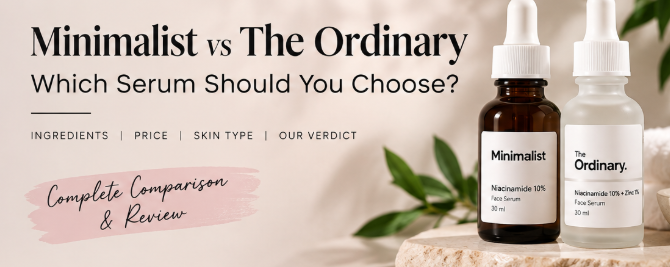
Choosing the right skincare serum can be confusing, especially when two popular brands offer products with similar ingredients and benefits. Minimalist and The Ordinary are both well-known for ingredient-focused skincare, but their products, formulas, textures, pricing, and suitability can differ.
If you’re trying to decide between the two, this Minimalist vs The Ordinary comparison will help you understand what to look for before buying.
Quick answer: Neither brand is automatically the right choice for everyone. The better option depends on your skin type, preferred ingredients, texture, budget, and how simple you want your skincare routine to be.
Minimalist vs The Ordinary: At a Glance
| Feature | Minimalist | The Ordinary |
|---|---|---|
| Product focus | Ingredient-focused skincare | Ingredient-focused skincare |
| Price positioning | Generally accessible | Generally accessible to mid-range |
| Product variety | Skincare-focused range | Wide ingredient-focused range |
| Beginner-friendly options | Yes | Yes, but some formulas require more research |
| Best for | Simple, targeted routines | Ingredient-focused experimentation |
| Availability in India | Widely available | Widely available through major beauty retailers |
What Makes Minimalist Popular?
Minimalist has built its reputation around straightforward skincare products that highlight their key active ingredients.
The brand appeals particularly to consumers who want to understand what ingredients are in their skincare products and what those ingredients are intended to do.
For beginners, this ingredient-focused approach can make it easier to search for products according to a specific skincare goal.
Pros of Minimalist
- Ingredient-focused product selection
- Accessible price points for many products
- Several products designed around specific skincare concerns
- Easy to build a simple routine
- Strong presence in the Indian beauty market
Things to Consider
Not every active ingredient is suitable for every skin type. A higher concentration of an ingredient isn’t automatically better, and introducing several active products at once can make it difficult to identify what is causing irritation.
What Makes The Ordinary Popular?
The Ordinary is known for its minimalist packaging and ingredient-focused approach.
Its range includes individual active ingredients and formulations designed around different skincare concerns. This makes the brand particularly interesting for people who enjoy researching ingredients and creating a customized routine.
Pros of The Ordinary
- Large ingredient-focused range
- Many targeted formulations
- Straightforward product positioning
- Useful for people who enjoy customizing their routine
- Strong international brand recognition
Things to Consider
The large product range can be overwhelming for beginners. Some products also require you to understand how different active ingredients fit together in a skincare routine.
Minimalist vs The Ordinary: Which Is Better for Beginners?
If you’re completely new to skincare, don’t choose a serum simply because it has the highest concentration or the most impressive-looking ingredient list.
Instead, start with one product that matches your specific goal.
For example:
- Oily skin: Look for lightweight, non-heavy formulas.
- Dry skin: Consider hydrating ingredients and barrier-supporting products.
- Uneven-looking skin: Look for ingredients commonly used for brightening and pigmentation concerns.
- Sensitive skin: Keep your routine simple and introduce new actives gradually.
A basic routine can often be more useful than buying several serums at once.
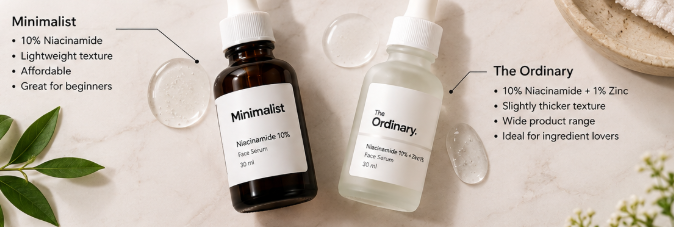
Minimalist vs The Ordinary for Niacinamide
Niacinamide is one of the most popular ingredients in modern skincare because it is used in formulations targeting several common concerns, including excess oil and uneven-looking skin.
When comparing a Minimalist vs The Ordinary niacinamide serum, don’t look only at the percentage printed on the bottle.
Consider:
- The complete ingredient list
- Your skin type
- The product texture
- How the product fits into your existing routine
- Whether you’re already using other active ingredients
The best serum is one that you can comfortably incorporate into a consistent routine.
Which Brand Is More Affordable?
Price can change depending on the product, seller, promotions, bottle size, and availability.
Instead of comparing only the sticker price, calculate the cost per ml.
For example:
Cost per ml = Product price ÷ Product volume
This gives you a more meaningful comparison between products with different bottle sizes.
Also check whether you’re comparing the same type of formulation. A 30 ml serum and a 60 ml serum shouldn’t be compared purely on their final selling price.
Which One Should You Buy?
The answer depends on what you want from your skincare routine.
Choose Minimalist if:
- You prefer a straightforward skincare routine.
- You want products that are easy to understand.
- You’re shopping primarily within the Indian skincare market.
- You want targeted products for particular skincare concerns.
Consider The Ordinary if:
- You enjoy researching skincare ingredients.
- You want a broad selection of ingredient-focused products.
- You like building a more customized skincare routine.
- You are comfortable learning how different actives work together.
Don’t Choose a Serum Based Only on Reviews
Online reviews can be useful, but skincare is highly individual.
One person’s favorite serum may cause irritation for someone else. Reviews should therefore be used to understand things such as:
- Texture
- Absorption
- Packaging
- Fragrance
- Ease of application
- Value for money
- Experience over time
They should not be treated as proof that a product will produce the same result for every person.
How to Test a New Skincare Product
When introducing a new skincare product, start slowly.
Apply a small amount according to the product instructions and monitor how your skin responds. Avoid introducing several new active products simultaneously because it can make it difficult to identify which product is responsible if irritation occurs.
If you have persistent or severe skin concerns, consider speaking with a qualified dermatologist instead of relying solely on online product reviews.
Final Verdict: Minimalist vs The Ordinary
There isn’t one universally correct choice between Minimalist and The Ordinary.
Both brands offer ingredient-focused skincare, but the right product depends on your skin type, skincare goal, budget, routine, and ingredient preferences.
If you’re a beginner, focus less on finding the “perfect” brand and more on creating a simple routine that you can use consistently.
Before purchasing, compare the ingredients, concentration, product size, price per ml, texture, and suitability for your skin type.
That approach will help you make a more informed skincare purchase than choosing a product simply because it is trending online.
Frequently Asked Questions
Is Minimalist better than The Ordinary?
Neither brand is automatically better for everyone. The right choice depends on your skin type, skincare concerns, preferred ingredients, formula, and budget.
Is Minimalist good for beginners?
Minimalist offers several ingredient-focused products that can fit into beginner routines. Beginners should still introduce active ingredients gradually.
Is The Ordinary good for Indian skin?
The Ordinary products can be used by people with different skin types, including people in India. However, suitability depends on the individual product and your skin’s needs.
Which is better for oily skin, Minimalist or The Ordinary?
There is no universal answer. Compare the specific products, their textures, ingredients, and how they fit your existing routine rather than comparing the brands as a whole.
Can I use Minimalist and The Ordinary together?
Some products may be compatible, but combining multiple active ingredients can increase the risk of irritation. Check the individual product instructions and avoid creating an unnecessarily complicated routine.
What should I check before buying a skincare serum?
Check the ingredients, concentration, product size, price per ml, intended use, skin-type suitability, and how the product fits into your existing skincare routine.